Best Smart Home Devices in 2026: The Smart Upgrades Every Homeowner Should Consider
Smart home technology has come a long way from simply asking a speaker to turn on the lights.
Today, homeowners can use connected devices to monitor water usage, detect leaks, control heating and cooling, secure doors, monitor their property, improve energy efficiency, and even receive alerts when something goes wrong while they're away.
But with hundreds of smart home products available, which ones are actually worth adding to your home?
For homeowners, the best smart devices aren't necessarily the ones with the most impressive features. The most useful devices are the ones that can help you protect your home, prevent damage, save energy, improve safety, and make home maintenance easier.
Here are some of the smart home devices worth considering in 2026.
1. Smart Water Leak Detectors
If there's one smart home upgrade we think homeowners shouldn't overlook, it's water monitoring.
A small plumbing leak can turn into a major repair surprisingly quickly. A leaking water heater, washing machine supply line, dishwasher connection, refrigerator line, or pipe under a sink can cause significant water damage before anyone notices.
Smart water leak detectors can be placed in areas where leaks are most likely to occur and can send an alert directly to your phone when moisture is detected.
Some newer systems go even further by monitoring water usage, identifying unusual consumption, and working with automatic shutoff valves.
Where should you place them?
Consider installing water sensors near:
Water heaters
Washing machines
Dishwashers
Kitchen sinks
Bathroom sinks
Toilets
Refrigerators with water connections
Sump pumps
Under-home plumbing
HVAC equipment with condensate lines
For homeowners, this may be one of the smartest investments because preventing water damage is usually far less expensive than repairing it.
Current water-monitoring systems range from simple sensors that send smartphone alerts to more advanced systems capable of monitoring water usage and automatically shutting off the home's water supply.
2. Smart Thermostats
Smart thermostats are another practical upgrade that can make your home more comfortable while potentially helping reduce energy consumption.
Unlike traditional programmable thermostats, smart thermostats can learn schedules, respond to temperature changes, and allow homeowners to adjust settings remotely.
Some systems can also provide information about energy usage and alert homeowners when HVAC equipment may be operating differently than expected.
For example, imagine leaving for vacation and realizing you've forgotten to adjust the thermostat.
Instead of turning around, you can change the temperature from your phone.
Before installing one
Make sure the thermostat is compatible with your HVAC system.
Some older heating and cooling systems may require additional wiring or equipment for certain smart thermostats to operate properly.
And remember: a smart thermostat doesn't make an inefficient HVAC system efficient. If your air conditioner is struggling because of an underlying mechanical or maintenance issue, the thermostat isn't going to solve the problem.
3. Smart Smoke and Carbon Monoxide Detectors
Smoke and carbon monoxide detectors are already essential safety devices.
Smart versions add another layer of convenience and awareness by allowing homeowners to receive notifications on their phones when an alarm is triggered or when certain maintenance conditions occur.
Depending on the device, you may also receive notifications about low batteries or other problems.
This can be especially helpful when you're away from home.
However, smart technology should never replace basic safety practices.
Make sure smoke and carbon monoxide detectors are properly installed, maintained, and located according to applicable manufacturer instructions and local requirements.
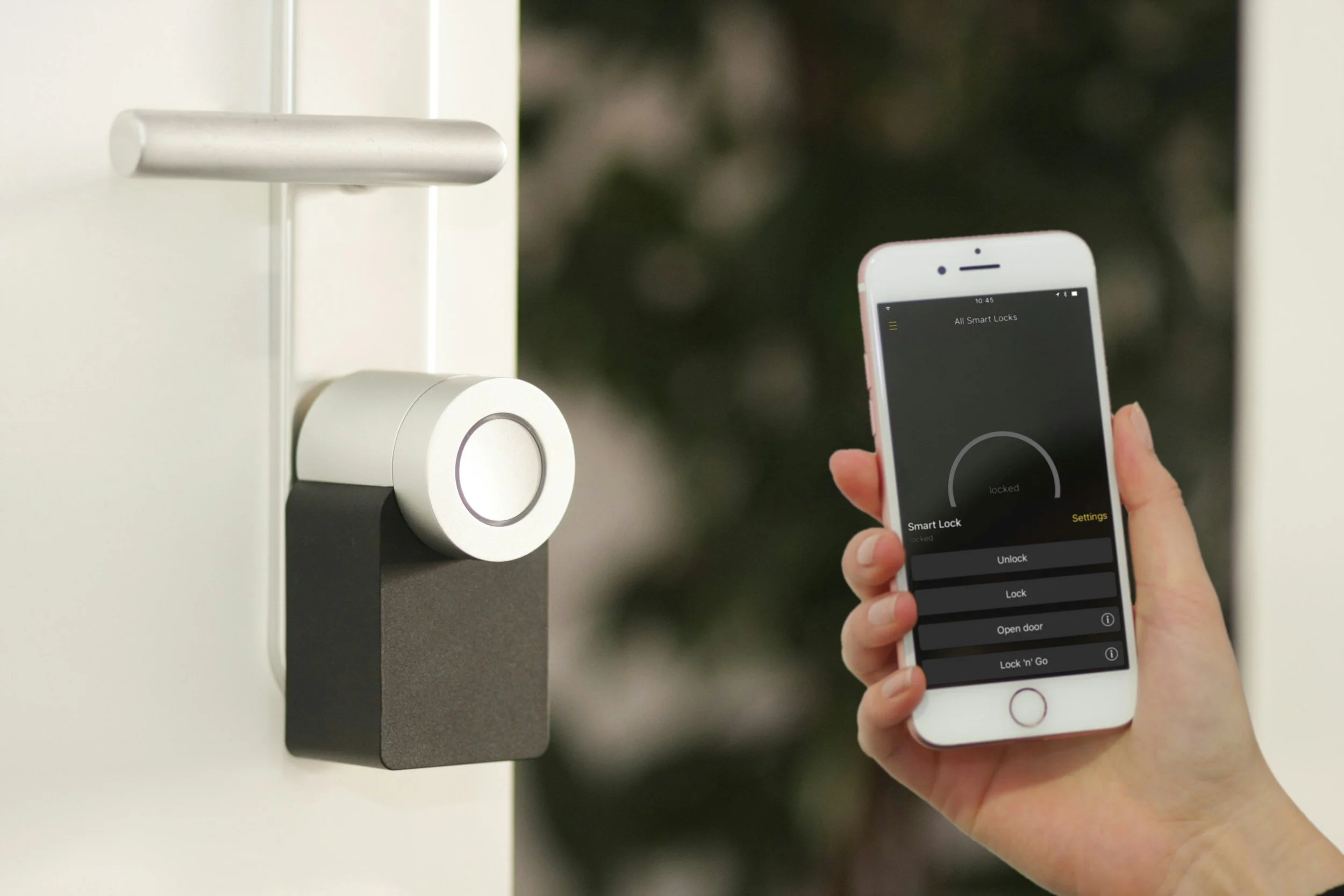
4. Smart Door Locks
Have you ever wondered whether you locked the front door after leaving the house?
Smart locks can eliminate some of that uncertainty.
Depending on the model, homeowners can lock or unlock doors remotely, create temporary access codes, monitor activity, and integrate the lock with other smart home devices.
This can be particularly useful for:
Families
Rental properties
Vacation homes
House cleaners
Dog walkers
Contractors
Property managers
Instead of handing out physical keys, you can provide temporary or unique access codes and change them when they're no longer needed.
When choosing a smart lock, consider the physical security of the lock itself—not just the technology.
A device being "smart" doesn't automatically make it more secure.
5. Video Doorbells
Video doorbells have become one of the most recognizable smart home products.
They can allow homeowners to see who is at the door, receive motion alerts, communicate with visitors, and keep a record of activity around the entryway.
For homeowners, the biggest advantage isn't necessarily having another camera.
It's having visibility when you're not home.
Depending on the system, video doorbells can also integrate with other smart home and security devices.
When installing one, think carefully about its viewing angle, lighting conditions, Wi-Fi signal, weather exposure, and placement.
A camera that is pointed directly into bright sunlight all day may not provide the useful image you expect.
6. Smart Security Cameras
Smart security cameras can provide homeowners with additional visibility around the property.
Depending on the system, cameras can monitor:
Front and rear yards
Driveways
Garages
Side yards
Entry doors
Common areas
Interior spaces
Some systems now incorporate more advanced detection and notification features.
But homeowners should also think about privacy and cybersecurity when installing connected cameras.
Use strong, unique passwords, enable available security features, keep devices updated, and understand where your video footage is stored.
A smart home is only as useful as the security protecting it.
7. Smart Plugs and Smart Switches
Not every smart home upgrade needs to cost hundreds of dollars.
Smart plugs and switches can be relatively inexpensive ways to automate everyday appliances and lighting.
For example, you could schedule:
Exterior lights
Lamps
Holiday decorations
Fans
Small appliances
Certain electronics
Smart switches can be especially useful because they can turn ordinary lighting fixtures into connected devices without replacing every light fixture in the home.
They're also useful for creating the appearance that someone is home while you're traveling.
8. Smart Lighting
Smart bulbs and switches allow homeowners to control lighting from a phone, voice assistant, schedule, or automation.
But smart lighting isn't only about convenience.
Lighting automation can improve visibility around walkways, entrances, stairways, and other areas of the property.
You can schedule exterior lights to turn on around sunset or create automated lighting routines while you're away.
Some systems can also gradually brighten lights in the morning or automatically turn lights off when nobody is using a room.
For homeowners who are building a smart home from scratch, lighting is often one of the easiest places to start.
9. Smart Garage Door Controllers
Here's a smart home device many homeowners don't think about until they need it.
A smart garage door controller can allow you to monitor and control your garage door remotely.
Depending on the system, you may receive an alert if the garage door has been left open or be able to close it from your smartphone.
That can be particularly useful when you're away from home and suddenly wonder:
"Did I close the garage?"
The garage is often one of the largest entry points into a home, so keeping track of its status can be a worthwhile security upgrade.
10. Smart Energy Monitors
If you're serious about understanding how your home uses electricity, consider a smart energy monitor.
These systems can provide homeowners with information about electricity consumption and, depending on the system, may help identify unusual usage patterns.
This can help homeowners become more aware of which appliances and systems consume the most energy.
You may discover that an appliance you assumed was insignificant is using considerably more electricity than expected.
Knowledge is the first step toward reducing unnecessary energy consumption.
11. Smart Indoor Air Quality Monitors
Your thermostat tells you the temperature.
But what about the air you're actually breathing?
Smart indoor air quality monitors can track various environmental conditions depending on the model, potentially including humidity, temperature, particulate matter, carbon dioxide, and other measurements.
These devices can help homeowners identify changes in indoor environmental conditions and determine when additional investigation may be appropriate.
For example, consistently high humidity may encourage homeowners to investigate ventilation, condensation, plumbing leaks, or other moisture-related conditions.
A smart air quality monitor isn't a substitute for professional testing when a specific concern exists, but it can be a useful monitoring tool.
12. Smart Sump Pump and Water Monitoring Systems
If your property has a sump pump, consider how important that small piece of equipment may be.
A sump pump can play an important role in protecting certain homes from water intrusion.
A smart sump pump monitor can notify you when the pump has a problem, loses power, or experiences other conditions depending on the system.
For homeowners who travel frequently or own properties in areas prone to heavy rainfall, this type of monitoring can provide valuable peace of mind.
What Should Homeowners Look for When Buying Smart Devices?
Before purchasing a smart home product, ask yourself a few questions.
Does it solve an actual problem?
Don't buy technology simply because it's available.
A smart device should make your home safer, more efficient, easier to maintain, or more convenient.
Will it work with your existing system?
Check compatibility before purchasing.
Matter is helping improve interoperability, but not every device works with every platform or feature.
What happens if the Wi-Fi goes down?
Some smart devices depend heavily on internet connectivity.
Understand what features continue to work if your internet connection is unavailable.
Does it require a subscription?
A device may look inexpensive initially but require a monthly subscription for important features.
Know the total cost before purchasing.
Is it secure?
Connected devices are part of your home's digital ecosystem.
Use strong passwords, enable multi-factor authentication when available, keep firmware updated, and replace devices that are no longer receiving security updates.
Smart Home Technology Doesn't Replace Good Home Maintenance
This is an important distinction.
Smart technology can help you monitor your home, but it doesn't eliminate the need to maintain it.
A water sensor can tell you that there's water on the floor.
It doesn't repair the leaking pipe.
A smart thermostat can tell you something unusual is happening with your HVAC system.
It doesn't replace HVAC maintenance.
A security camera can show you what's happening outside.
It doesn't replace a properly maintained door, lock, gate, or exterior lighting.
And a smart smoke detector still needs to be properly installed and maintained.
Think of smart technology as another tool in your homeowner's toolbox.
The Best Smart Home Is the One That Helps You Protect Your Investment
Your home is one of the largest investments you'll make.
The best smart home devices aren't necessarily the flashiest ones. They're the devices that help you understand what's happening with your property before a small issue becomes a major problem.
A water sensor that catches a leak early.
A thermostat that helps you manage your HVAC system.
A smart lock that lets you control access.
A camera that gives you visibility while you're away.
An energy monitor that helps you understand your utility usage.
These are technologies that can provide real value to homeowners.
And as smart home technology continues to evolve, the connection between home safety, maintenance, energy efficiency, and technology will only become more important.
Before You Buy the Gadgets, Understand the Home
Smart technology can make homeownership easier—but it starts with understanding the property itself.
A professional home inspection can help buyers understand the condition of major systems and components before they purchase a home. From the roof and attic to plumbing, electrical, HVAC, foundation, crawlspace, and more, knowing what you're buying is an important part of becoming a successful homeowner.
At Elevate Inspections, our experienced inspectors provide detailed inspections and photo documentation to help buyers make informed decisions about their homes.
Because the smartest thing you can add to your home isn't always another device.
It's knowledge about the home itself.