Buying a home is expensive.
Between the down payment, closing costs, moving expenses, insurance, repairs, and everything else that comes with purchasing a property, it's understandable that buyers may look for ways to save money.
That naturally leads to an important question:
Can you perform your own home inspection?
The short answer is yes—you can absolutely walk through a home yourself and look for potential problems.
But there's an important distinction between doing your own home assessment and replacing a professional home inspection.
A DIY walkthrough can be extremely valuable. It can help you become more familiar with the property, identify obvious concerns, and develop a list of questions. However, it shouldn't be viewed as a substitute for a professional inspection—particularly when you're making one of the largest purchases of your life.
Here's why.
What Is a DIY Home Inspection?
A DIY home inspection is essentially a detailed walkthrough where you examine the property yourself.
You might look at:
The roof and exterior
Attic areas
Foundation
Crawlspace
Plumbing fixtures
Electrical components
HVAC equipment
Windows and doors
Appliances
Interior walls and ceilings
Drainage and grading
Garage
Water heater
You can turn lights on and off, operate faucets, flush toilets, open windows, test doors, look for visible water staining, and pay attention to unusual noises or odors.
Doing this can be useful.
In fact, we encourage buyers to pay attention and ask questions.
The problem occurs when a buyer assumes that a walkthrough can provide the same level of evaluation as an inspection performed by an experienced professional.
What Can You Find Yourself?
You may be surprised by how much you can notice simply by slowing down and looking carefully.
For example, you may spot:
Water Damage
Look at ceilings, walls, flooring, cabinets, and areas underneath sinks.
Discoloration, staining, bubbling paint, swollen materials, or musty odors can indicate previous or ongoing moisture issues.
But seeing evidence of water damage is only the beginning.
The more important question is:
Where did the water come from, and is the source still active?
That's where additional investigation may be necessary.
Plumbing Problems
Run faucets.
Flush toilets.
Look underneath sinks.
Check exposed supply lines and visible drain connections.
Look for leaks, corrosion, poor drainage, or unusual noises.
A DIY walkthrough can identify obvious plumbing concerns, but much of a home's plumbing system is concealed inside walls, beneath floors, or underground.
Electrical Concerns
You can look at visible outlets, switches, light fixtures, and the electrical panel.
You may notice damaged outlets, missing covers, exposed wiring, or other obvious concerns.
However, electrical systems can contain serious problems that aren't obvious to an untrained eye.
That's one area where attempting to go beyond a visual assessment can become dangerous.
HVAC Issues
Turn the heating and cooling systems on and pay attention to whether they operate.
Listen for unusual sounds.
Check whether air is coming from the registers.
Look at the condition of accessible filters and equipment.
But keep in mind that determining whether an HVAC system is truly operating properly can require experience, testing, measurements, and specialized knowledge.
Roof Concerns
From the ground, you may be able to spot missing shingles, damaged roofing materials, sagging areas, deteriorated flashing, or other visible concerns.
But climbing onto a roof without the proper equipment, training, or conditions can create a serious safety risk.
A professional inspector's evaluation is not simply about looking at the roof. It's also about understanding what they're seeing and identifying conditions that may warrant further evaluation.
The Biggest Problem With a DIY Inspection: You Don't Know What You Don't Know
This is probably the most important point.
A homeowner may be very knowledgeable about construction, maintenance, or even a particular trade.
But a house is made up of dozens of interconnected systems.
You might notice that an outlet isn't working.
But do you know why?
You might see a crack in a foundation wall.
But do you know whether it's cosmetic, structural, active, or related to another condition?
You might notice that an HVAC system is producing cold air.
But does that mean it's operating properly?
You might see staining around a window.
But is it an old repair, condensation, or evidence of an active leak?
Identifying a symptom is not always the same as identifying the problem.
That's where experience becomes extremely valuable.
A Professional Home Inspection Isn't Just About Finding Problems
One misconception is that the job of a home inspector is simply to find everything wrong with a house.
That's not quite how a professional inspection works.
A general home inspection is typically a visual examination of accessible areas and components of a property. Industry standards also recognize that a home inspection is not technically exhaustive and cannot identify every concealed or latent defect.
The inspector is gathering information and documenting observable conditions within the agreed-upon scope.
A professional inspection also provides something a DIY walkthrough generally cannot:
A structured evaluation and written report that documents the inspector's observations.
A Home Inspection Isn't a Guarantee That Nothing Will Go Wrong
It's also important to have realistic expectations.
Even a professional inspection won't find every problem in a home.
Why?
Because some defects are concealed.
Others may not be present or observable on the day of the inspection. Some components require specialized testing or evaluation, and certain systems or areas may be inaccessible.
Industry standards specifically recognize that inspections are based on conditions observed on the inspection date and aren't predictions of future conditions.
So don't think of a home inspection as a warranty.
Think of it as information that helps you make a more informed decision.
Why Professional Experience Matters
An experienced home inspector has seen hundreds or thousands of homes.
Over time, inspectors develop an understanding of how different components and systems should look, operate, and interact.
That experience can make a difference when something doesn't look quite right.
For example, an experienced inspector may recognize:
Signs of improper drainage
Common roofing deficiencies
Poorly installed plumbing
Electrical safety concerns
HVAC installation issues
Evidence of previous repairs
Moisture-related patterns
Structural warning signs
Improper modifications
Deferred maintenance
Conditions that warrant specialist evaluation
The value isn't simply in having another person walk through the house.
It's having someone who knows what to look for.
Can You Use a DIY Inspection Checklist?
Absolutely.
In fact, a DIY checklist can be an excellent way for buyers to prepare for a professional inspection.
Walk through the property before the inspection and write down anything that concerns you.
Pay attention to:
Exterior
Is water draining away from the house?
Are there visible cracks or damage?
Are exterior surfaces deteriorated?
Are windows and doors operating properly?
Are there signs of moisture intrusion?
Does the roof appear damaged from visible areas?
Interior
Are there stains on ceilings or walls?
Do doors and windows operate?
Are there unusual odors?
Are floors noticeably uneven?
Do faucets and fixtures operate?
Are there visible plumbing leaks?
Electrical
Are outlets or switches damaged?
Are there loose or missing covers?
Are there exposed wires?
Does the electrical panel appear properly maintained?
HVAC
Does heating operate?
Does cooling operate?
Are filters present?
Are there unusual noises or odors?
Attic, Crawlspace & Foundation
Are there visible signs of water intrusion?
Is there damaged insulation?
Are there signs of pests?
Are there unusual cracks or movement?
Are there exposed or damaged components?
The purpose isn't to diagnose everything.
The purpose is to observe, document, and ask questions.
Don't Put Yourself in Danger to Inspect a House
This is especially important.
A home inspection should never require you to put yourself at unnecessary risk.
Don't climb onto a steep or wet roof because you want a closer look.
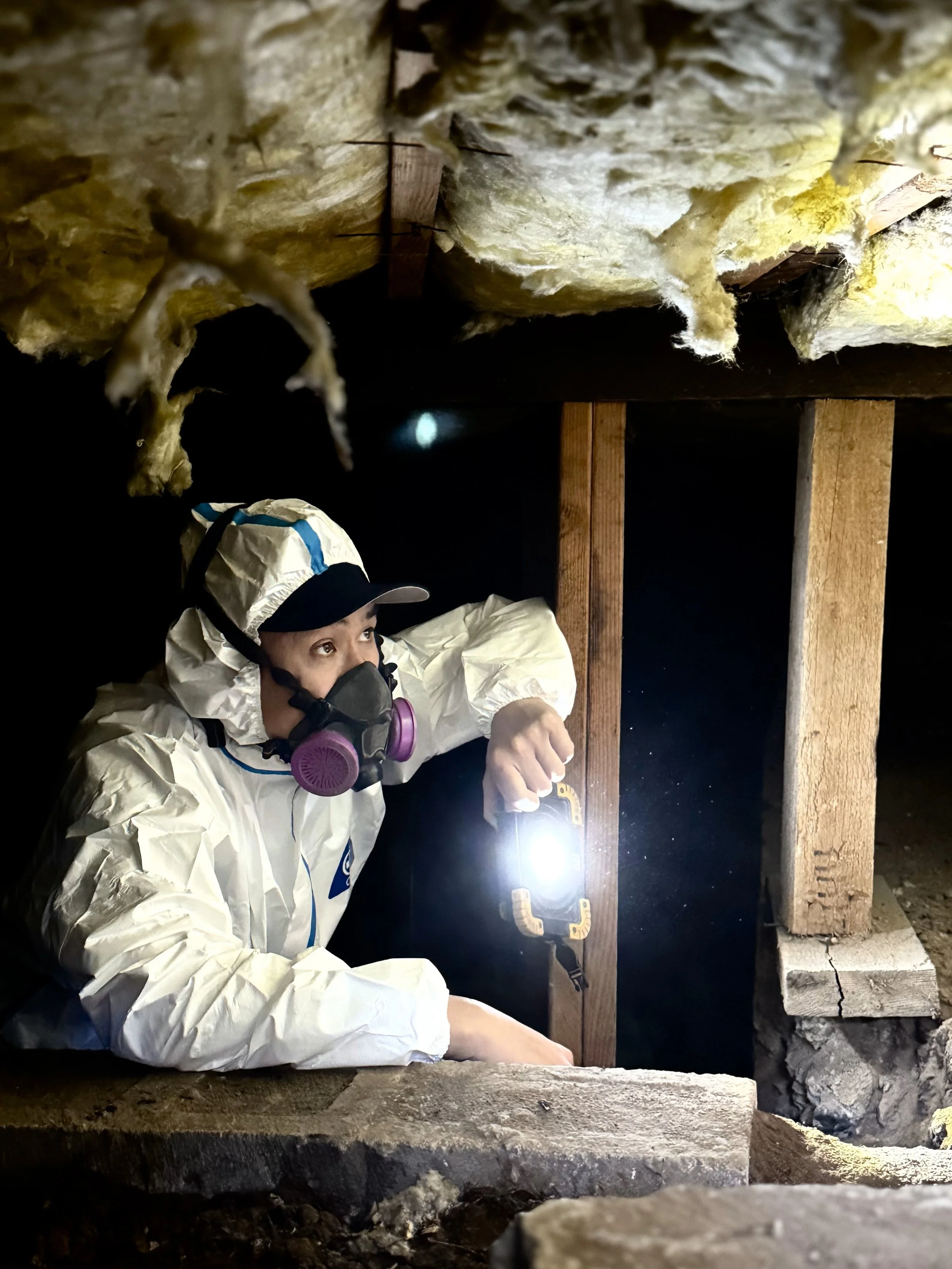
Don't crawl into a confined or unsafe area.
Don't remove electrical panel covers.
Don't dismantle equipment.
Don't enter areas that appear unsafe.
Professional inspection standards emphasize accessible areas and recognize limitations involving concealed or inaccessible conditions.
There is a big difference between being thorough and being reckless.
The Best DIY Inspection Is Actually Preparation for Your Professional Inspection
Instead of asking:
"Can I replace my home inspection with a DIY inspection?"
A better question is:
"How can I use my own walkthrough to get more out of my professional inspection?"
Before your inspector arrives, walk through the property yourself.
Write down your concerns.
Review the seller's disclosures.
Look at previous repair records if they're available.
Pay attention to areas that seem unusual.
Then share those concerns with your inspector.
This gives your inspector a better understanding of what matters to you and allows you to ask more informed questions.
What About New Construction?
New construction deserves a special mention.
Some buyers assume that because a home is brand new, it doesn't need an inspection.
That's not necessarily the case.
New homes can have construction defects, incomplete work, installation issues, damaged materials, or components that aren't functioning as intended.
A professional inspection can provide an additional set of experienced eyes before you take ownership.
And if you're buying a newly constructed home, consider asking about inspections at different stages of construction when appropriate.
What About Older Homes?
The older the home, the more important understanding its history and condition can become.
Older homes may contain:
Aging plumbing
Older electrical components
Previous modifications
Multiple layers of repairs
Deteriorated roofing
Aging HVAC systems
Foundation movement
Moisture-related issues
Deferred maintenance
That doesn't mean older homes are bad homes.
It simply means buyers should understand what they're purchasing and what future maintenance may look like.
What Should You Do After the Inspection?
Once you receive your professional inspection report, don't just look at the number of findings.
Focus on the important ones.
Ask:
Which items are safety concerns?
Which issues could cause significant damage if ignored?
What needs immediate attention?
What should be monitored?
Which items are normal maintenance?
Which conditions should be evaluated by a specialist?
A good inspection report should help you understand the property's condition—not simply overwhelm you with a list of defects.
So, Can You Perform Your Own Home Inspection?
Yes—but it shouldn't be your only inspection when you're purchasing a home.
A DIY walkthrough is an excellent way to familiarize yourself with a property and identify questions or obvious concerns.
But a professional home inspection brings experience, a defined scope, systematic evaluation, and detailed documentation to the process.
More importantly, an experienced inspector may recognize conditions that you simply wouldn't know to look for.
And when you're making a six- or seven-figure purchase, saving the cost of an inspection may not be the place to cut corners.
The Bottom Line
You don't need to be a contractor to be a smart homeowner.
Learn your home's systems. Ask questions. Walk through the property. Pay attention to maintenance. Understand your inspection report.
But when you're purchasing a home, don't confuse looking at a house with inspecting a house.
Your own walkthrough can tell you a lot.
A professional inspection can tell you a lot more.
At Elevate Inspections, our experienced inspectors provide detailed residential and commercial property inspections throughout Long Beach and surrounding Southern California communities. We examine accessible areas and major components of the property and provide detailed photo documentation to help buyers understand the condition of their potential investment.
Because when you're buying a home, knowing what you're buying is worth the investment.